Can Smarter Genset Technology Help Industries Improve Energy Efficiency?
Energy efficiency has become an important consideration for industries that depend on continuous power. Manufacturing plants, healthcare facilities, commercial buildings, data centers, and other energy-intensive operations need reliable electricity while keeping fuel consumption and operating costs under control. As power requirements grow, a backup generator alone is no longer enough. Industries are looking for systems that can monitor performance, respond to changing loads, and use fuel more effectively.
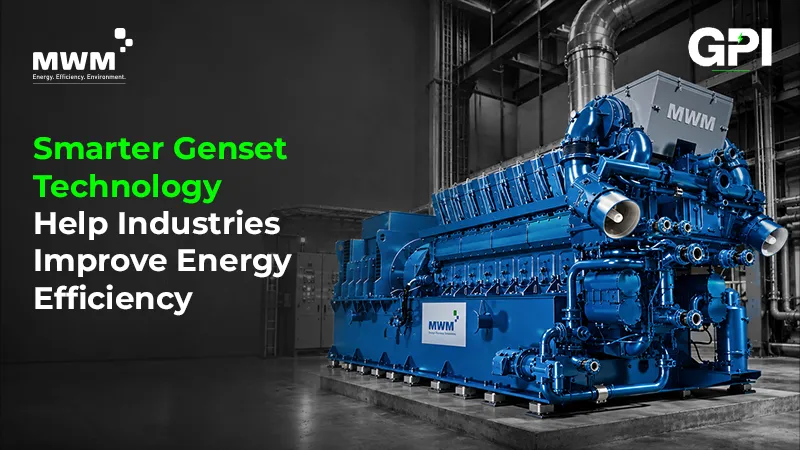
Smarter genset technology can make a practical difference. Modern gas gensets combine efficient engines with digital controls, monitoring systems, and improved combustion technologies. These capabilities allow businesses to understand how their power systems are performing and identify opportunities to improve efficiency. We see the move toward smarter gensets as closely tied to how industries are rethinking energy use.
Why Are Industries Looking at Smarter Genset Technology?
The answer starts with a simple operational challenge. Industrial facilities can have highly variable power requirements throughout the day. Equipment may start and stop at different times, production loads can change, and some systems may need continuous power while others operate intermittently.
A conventional generator can provide the required electricity, but smarter systems can do more. They can provide data on fuel usage, operating conditions, engine performance, and maintenance needs. This gives operators better control over how the power system is being used.
For industries focused on improving efficiency, these capabilities can translate into better resource management and more informed decisions.
Better Monitoring Helps Identify Energy Losses
Energy efficiency starts with knowing how a system is performing.
Smart monitoring technology lets operators track key parameters in real time. This can include power output, fuel consumption, engine conditions, operating hours, and system alerts. Having access to this information makes it easier to identify unusual consumption patterns or performance issues.
For example, a sudden change in fuel consumption could indicate that the equipment needs attention. Early identification lets maintenance teams investigate the issue before it becomes a larger operational problem.
E2P gas gensets use advanced telemetry and real-time performance recording to support monitoring and maintenance planning.
Efficient Combustion Can Improve Fuel Utilization
Fuel efficiency is another major factor in industrial power generation.
A genset generator with efficient combustion technology can convert a greater portion of the available fuel energy into useful electrical power. This becomes particularly important for facilities that operate generators for long periods.
Modern gas gensets are designed to optimize combustion and reduce unnecessary fuel consumption. E2P gas gensets, for example, use combustion technology focused on maximizing energy generation while minimizing fuel usage.
For businesses, improved fuel utilization can support lower operating expenses while maintaining the required power output.
Smarter Controls Can Adapt to Changing Loads
Industrial loads rarely remain constant throughout the day.
A production facility may run heavy equipment during one shift and have much lower demand during another. A generator operating without considering these variations may not always operate at its most efficient point.
Advanced controls help manage changing operating conditions more effectively. Modern systems can monitor load behavior and optimize generator performance accordingly. Better control over the relationship between power demand and generation can help industries use their equipment more efficiently.
Predictive Maintenance Can Reduce Unplanned Downtime
Energy efficiency also depends on equipment condition.
A generator that is not operating properly can consume more fuel, deliver lower performance, or require unexpected repairs. Smart monitoring systems can provide early indicators of potential equipment issues, giving maintenance teams an opportunity to address them before they cause significant disruption.
We consider this particularly useful for industries where downtime can affect production schedules or critical services. Regular performance data can help maintenance teams move from reactive repairs toward more planned maintenance practices.
Gas-Based Generation Can Support Efficiency Goals
Fuel choice also plays a role in the efficiency conversation.
Gas gensets using natural gas or biogas can offer an alternative to conventional diesel-based power generation. E2P's gas gensets are designed for applications across industries ranging from manufacturing to healthcare, with features focused on fuel efficiency, reduced emissions, reliability, and smart monitoring.
Kirloskar gas gensets also incorporate features such as onboard diagnostics, app-based monitoring, and advanced engine control. These capabilities provide operators with greater visibility into equipment performance and can support more proactive maintenance.
Rising Electricity Demand Makes Efficiency More Important
India's electricity demand is continuing to grow, making efficient power use increasingly relevant for industrial operations. The International Energy Agency expects India's electricity demand to grow at an average annual rate of 6.4% from 2026 through 2030, with the industrial sector expected to contribute around one-third of this additional demand.
This growth makes efficient power management increasingly important. Industries need to meet expanding energy requirements while keeping a close watch on consumption and operating costs.
How We Approach Smarter Power Solutions
Technology works best when it is matched to the actual requirements of a facility.
We work with businesses to understand their site conditions, load requirements, operating patterns, and energy objectives before developing a power solution. Our work with gas gensets includes system integration, project execution, and customized solutions designed around specific applications.
Our experience with solutions such as Kirloskar and E2P gas gensets allows us to combine efficient power generation with monitoring and control capabilities. We also focus on engineering and system integration so that the genset works effectively within the wider power infrastructure.
This approach helps industries look at energy efficiency as part of the complete power system rather than as a feature of the generator alone.
What Does the Future Hold for Smarter Gensets?
The shift toward smarter genset technology is likely to continue as industries become more focused on energy efficiency, operating costs, reliability, and emissions.
Digital monitoring, advanced controls, efficient combustion, and predictive maintenance are making power generation systems more responsive and easier to manage. For industries with demanding power requirements, these capabilities can support better utilization of fuel and equipment.
As industrial genset manufacturers in india continue to adopt smarter technologies, businesses will have more options to improve the way they generate and manage power. The focus is gradually shifting toward systems that provide reliable electricity while giving operators greater control over efficiency and performance.
For industries planning their next power generation project, evaluating a genset generator's intelligence, monitoring capabilities, fuel efficiency, and operating profile can be an important step toward building a more efficient energy system.