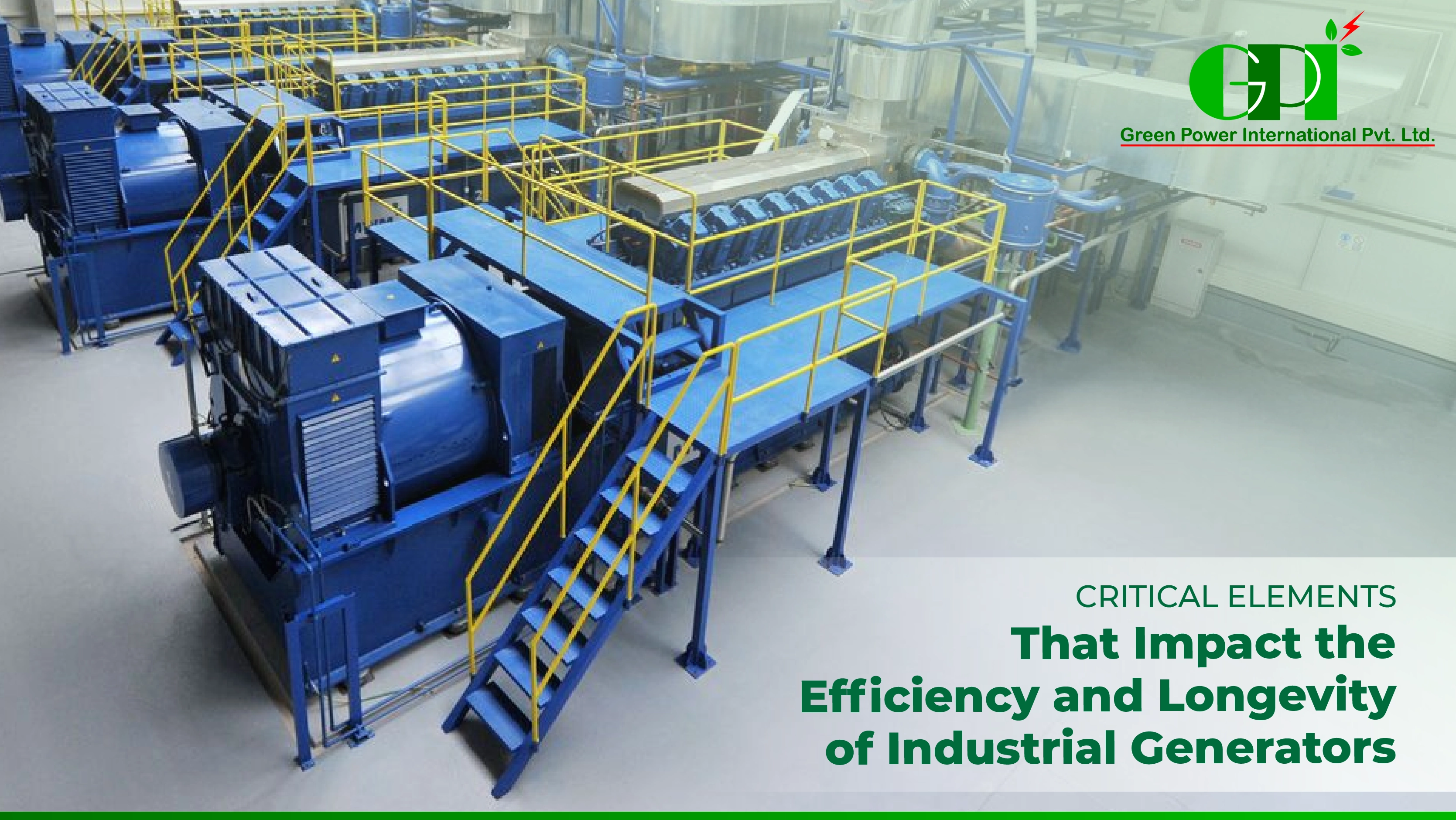
Critical Elements That Impact the Efficiency and Longevity of Industrial Generators
Reliable power forms the backbone of industrial operations, supporting production continuity, equipment protection, and operational stability. Across manufacturing plants, infrastructure projects, and critical facilities, we at Green Power International work closely with industrial generators to ensure consistent output under demanding conditions. Efficiency and long service life do not come from the equipment alone; they result from how carefully we select, install, operate, and maintain these systems over time.
Looking ahead to 2026, the global generator sets market is projected to expand significantly. Estimates indicate that market revenue is expected to reach approximately USD 50.71 billion, up from USD 47.46 billion in 2025, with a compound annual growth rate of roughly 7.8% through 2035. This projected growth reflects increasing industrial reliance on reliable power systems and underscores the importance of optimizing generator efficiency, maintenance, and lifecycle management.
Through our experience working with diverse power requirements, we have seen how overlooked details gradually affect performance. Fuel characteristics, thermal management, load behavior, and maintenance discipline all influence results. When these elements work together, generators operate reliably for years while maintaining consistent output and operational reliability.
Key Factors Affecting Generator Efficiency and Longevity
Generator Sizing and Load Optimization
Correct generator sizing remains foundational to efficiency and durability. Systems that operate far outside their optimal load range experience unnecessary stress. Oversized units often run at low loads, leading to inefficient combustion, while undersized units struggle to meet demand, causing overheating and accelerated wear.
Our approach to capacity planning involves analyzing real operational loads, peak demand, and future scalability requirements. Facilities that depend on high-capacity generators benefit from precise sizing that balances current needs with expansion plans. Proper load alignment improves fuel utilization, stabilizes voltage output, and reduces strain on mechanical components.
Fuel Selection and Fuel Consistency
Fuel type plays a decisive role in generator efficiency and engine health. Gas-based systems continue to gain preference due to cleaner combustion and reduced residue buildup. An industrial gas generator typically delivers more consistent combustion characteristics, contributing to lower emissions and longer service intervals.
Fuel consistency also matters. Variations in gas composition or pressure can affect ignition stability and thermal balance. Gas-powered units, such as the MWM gas generator, are engineered for efficient fuel utilization. Yet, stable fuel quality remains essential for achieving optimal performance: reliable filtration and pressure regulation support smooth engine operation over extended hours.
Thermal Management and Cooling Design
Effective temperature control protects generators from premature component degradation. Excess heat accelerates oil breakdown, weakens insulation, and reduces overall efficiency. Cooling systems must be designed for site-specific conditions, including ambient temperature, ventilation, and altitude.
We emphasize radiator sizing, coolant integrity, and airflow management during system design. Continuous-duty applications benefit from cooling solutions that support stable operation without excessive thermal cycling. Proper heat dissipation enables engines to operate consistently while protecting internal components.
Preventive Maintenance and Service Discipline
Maintenance consistency directly affects generator longevity. Regular oil changes, filter replacements, and system inspections prevent minor issues from escalating into major failures. Maintenance schedules aligned with operating hours provide better protection than fixed calendar-based intervals.
Modern generators increasingly integrate monitoring tools that track performance parameters in real time. A well-maintained genset generator operates more efficiently, maintains voltage stability, and experiences fewer unplanned shutdowns. Structured service planning also helps organizations manage lifecycle costs more effectively.
Installation Accuracy and System Integration
Installation quality influences generator behavior from the moment it is commissioned. Improper alignment, inadequate foundations, or insufficient vibration isolation introduce mechanical stress that accumulates over time. Electrical integration must also be precise to ensure proper grounding, load distribution, and synchronization.
As part of EPC-driven power solutions, we focus on coordinating electrical, mechanical, and control elements from the start. We design generator installations that align with site infrastructure, allowing systems to operate smoothly while remaining adaptable to future upgrades or load changes.
Environmental Conditions and Site Adaptation
Operating environments place varying demands on generator systems. Dust, humidity, temperature extremes, and corrosive conditions affect airflow, insulation, and mechanical components. Protective enclosures, high-quality filtration, and corrosion-resistant materials help mitigate environmental impact.
Industrial sites often require rugged designs, similar to those of Caterpillar generators, which are known for operating reliably in challenging conditions. Environmental adaptation supports consistent output while reducing maintenance frequency and extending component life.
Control Systems and Performance Monitoring
Advanced control systems enhance both efficiency and reliability by providing real-time visibility into generator performance. Monitoring parameters such as load distribution, fuel consumption, temperature trends, and fault alerts enables proactive decision-making.
Automated load sharing and intelligent alarms support smoother operation, especially for high-performance generators operating in parallel or variable-load environments. These systems reduce response time to irregularities and help maintain stable output under changing conditions.
Operator Awareness and Usage Practices
Operational behavior plays a significant role in generator performance. Trained operators understand proper startup sequences, load application practices, and shutdown procedures that protect engine components. Poor operating habits, including sudden load changes or extended idling, increase wear and reduce efficiency.
Clear operational guidelines and periodic training help ensure consistent handling across teams. Generator systems, including a Kirloskar CNG generator, deliver optimal results when supported by informed usage and disciplined operating practices.
Lifecycle Planning and Long-Term Reliability
Industrial generators represent long-term infrastructure investments. Planning beyond initial installation supports better performance and cost control throughout the system’s lifespan. Spare part availability, service access, and upgrade compatibility influence long-term reliability.
Through our work at Green Power International, our teams design power solutions with lifecycle performance in mind, leveraging extensive experience with gas gensets and integrated EPC projects. This approach allows us to align system design with long-term operational goals rather than focusing solely on short-term output requirements.
Efficiency and longevity in industrial generators result from informed planning, disciplined maintenance, and responsible operation. Accurate sizing, fuel stability, thermal management, installation quality, and monitoring systems each contribute to sustained performance. When these elements are aligned, generators deliver dependable power while maintaining efficiency over extended service life. Focusing on these critical factors allows us to help organizations protect essential operations, control operational costs, and ensure long-term reliability across industrial power applications.
Frequently ASked Questions (FAQs):
1. Which generator is the strongest?
High-capacity caterpillar generators and advanced mwm gas generators are among the most powerful options, offering reliable performance for demanding industrial applications.
2. Why Choose Green Power International?
Through our experience, we at Green Power International deliver power solutions designed for efficiency, longevity, and seamless integration, ensuring that industrial operations remain reliable and cost-effective.
3. Which generator is best for industry?
The best choice depends on load requirements, fuel type, and operational environment; kirloskar CNG generators, high-performance generators, and genset generators are often ideal for industrial setups.