What to Look for When Choosing a Genset Generator for Industrial Use
Power reliability shapes how smoothly an industrial operation runs. A short interruption can impact production schedules, safety systems, and equipment performance. That makes the choice of a genset generator a core operational decision rather than a backup plan.
At Green Power International, we work closely with industrial power systems across varied operating conditions, and often see teams focus on one or two factors, such as output capacity or upfront cost, while overlooking elements that affect long-term performance. The right generator must match operational loads, fuel availability, environmental conditions, and future expansion plans. With the global generator market expected to grow significantly, reaching an estimated USD 45.79 billion in 2026 as industries expand and demand for uninterrupted power rises, choosing the right genset becomes more critical than ever.
The points below outline exactly what should be checked when selecting a generator built for demanding environments.
Key Factors to Evaluate Before Selecting a Genset Generator
Correct Power Capacity for Actual Operating Loads
The first thing to look for is how well the generator matches real power demand. Industrial facilities rarely operate at a constant load. Motors, pumps, compressors, and production lines create starting surges that must be accounted for during sizing.
A generator that is too small may struggle during peak demand, while an oversized unit can run inefficiently for long periods. Load studies help determine the appropriate capacity range, ensuring stable voltage and frequency under both steady-state and transient conditions. This step directly affects fuel efficiency, engine life, and system reliability.
Suitable Fuel Type for Continuous Operations
Fuel selection influences operating cost, emissions, and maintenance requirements. Industrial users should evaluate fuel availability, storage logistics, and price stability before finalizing a solution.
Gas-based systems are increasingly preferred for extended operating hours. A CNG generator supports cleaner combustion and lower particulate output, making it suitable for facilities with a consistent gas supply. Operations that generate organic waste may consider a biogas genset, which allows power generation using onsite fuel sources while reducing disposal challenges.
Fuel compatibility should always align with operating hours and site conditions.
Engine Reliability and Proven Technology
Engine quality plays a decisive role in industrial performance. Continuous-duty applications demand engines built for thermal stability, load variations, and long service intervals.
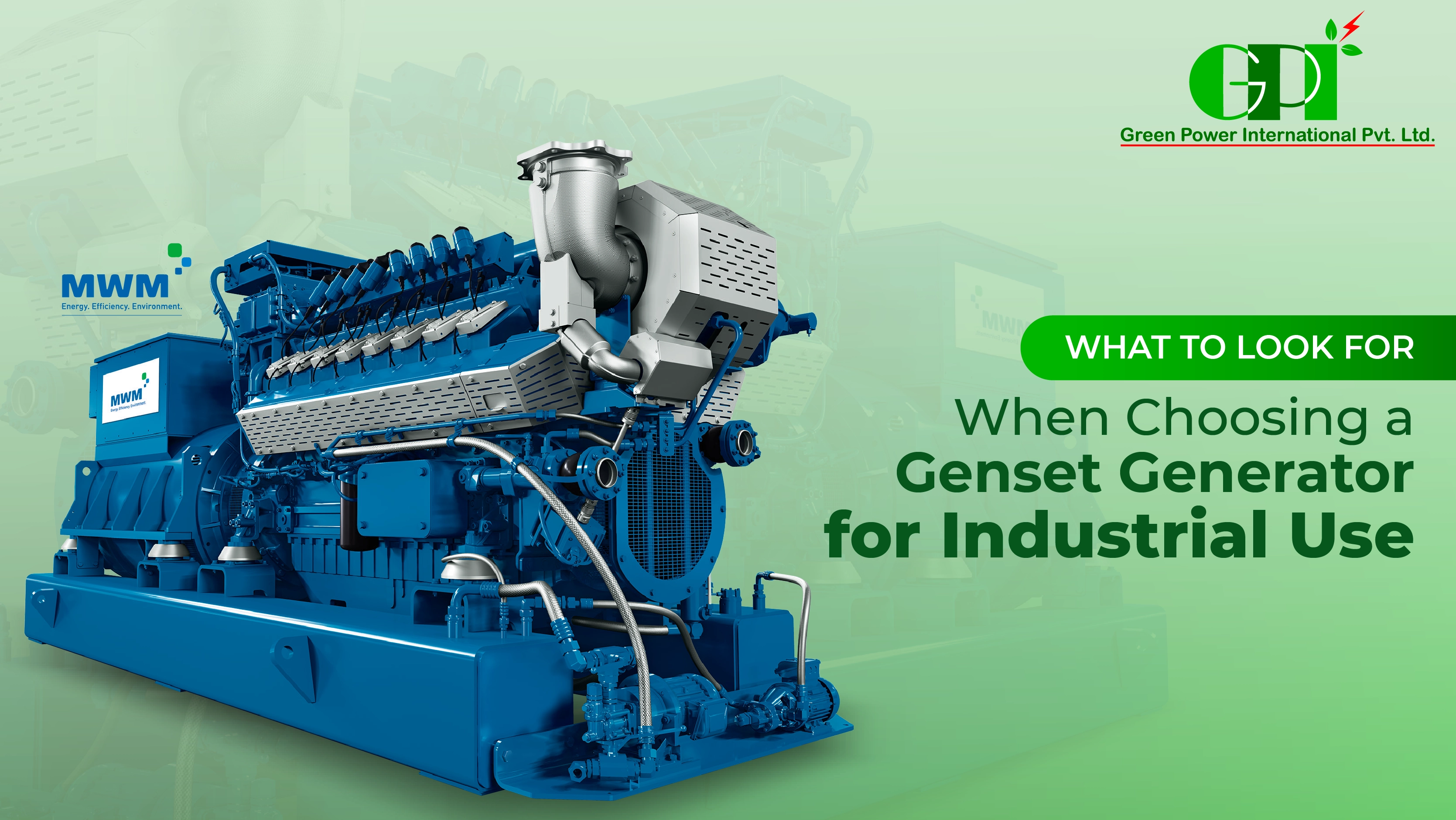
Globally established platforms such as the mwm genset are commonly chosen for gas-based industrial power due to their efficiency and durability. These engines support extended runtimes while maintaining consistent output and emissions control.
When evaluating options, industrial teams should look for engines with a strong operational track record and service availability.
Emissions and Compliance Readiness
Industrial gensets must comply with applicable emission standards to avoid operational restrictions or penalties. Emission performance becomes even more critical for plants located near urban or regulated zones.
Gas gensets generally produce lower NOx and particulate emissions than liquid-fuel alternatives. Noise levels should also be reviewed, as industrial installations often operate near workspaces or neighbouring facilities. Proper acoustic design and compliance-ready configurations help avoid future retrofitting costs.
Efficiency and Total Cost of Ownership
Looking only at the purchase price can be misleading. What matters more is how efficiently the generator operates over its whole lifecycle.
Fuel consumption rates, oil change intervals, spare parts availability, and service access directly influence operating expenses. High-efficiency gensets reduce fuel usage during continuous operation and lower long-term costs.
This is why many buyers evaluating genset manufacturers in india focus on lifecycle support and proven performance rather than initial pricing alone.
Control Systems and Operational Monitoring
Modern industrial generators rely on advanced control systems for safe and efficient operation. These systems manage load sharing, fault protection, synchronization, and remote monitoring.
Real-time data allows operators to track performance trends and identify issues early. Clear visibility into generator health supports preventive maintenance and reduces unplanned downtime. Control system quality should always match the complexity of the industrial setup.
Installation Quality and EPC Capability
A generator’s performance depends heavily on its installation. Ventilation, exhaust routing, cooling, and fuel systems must meet technical specifications.
Complex industrial sites often benefit from integrated EPC support, especially when multiple generators or gas infrastructure are involved. Coordinated execution reduces installation risks and ensures compliance with safety standards. This approach is particularly important for large or continuous-duty installations.
Service Support and Long-Term Reliability
After installation, consistent service support becomes the most critical factor. Industrial operations require quick response times, trained technicians, and reliable spare parts supply.
A strong service network helps maintain uptime and protects the investment over the long term. Suppliers with experience across gas-based power solutions and industrial EPC execution bring practical value beyond equipment supply.
Through our work at Green Power International, we focus on long-term performance and technical alignment while planning, executing, and supporting industrial power systems, ensuring reliability throughout the equipment lifecycle.
Planning for Growth and Scalability
Industrial power needs rarely remain static. Expansion plans, new machinery, or process changes can increase demand over time.
Generators that support modular expansion or parallel operation allow facilities to scale without major redesign. Flexibility in fuel compatibility and control systems also improves future readiness.
Making the Right Industrial Choice
Choosing a genset for industrial use comes down to a clear set of criteria: proper sizing, suitable fuel, proven engine technology, emissions compliance, efficiency, installation quality, and reliable service support.
A generator selected with these factors in mind delivers stable power, predictable operating costs, and long-term reliability. Teams that follow this structured evaluation approach are better positioned to build power systems that support production goals and operational continuity.
Frequently Asked Questions (FAQs):
What is the use of a genset generator?
A genset generator supplies reliable power during outages or unstable grid conditions, supporting continuous and safe industrial operations.
Why is it called a genset?
The term “genset” comes from generator set, which refers to a complete power system that combines the engine, alternator, and control components.
What is a genset vs a generator?
A generator is only the alternator, while a genset includes all systems required for power generation and control. As part of Green Power International’s industrial power work, we see gensets preferred because the integrated design ensures consistent performance and reliability.