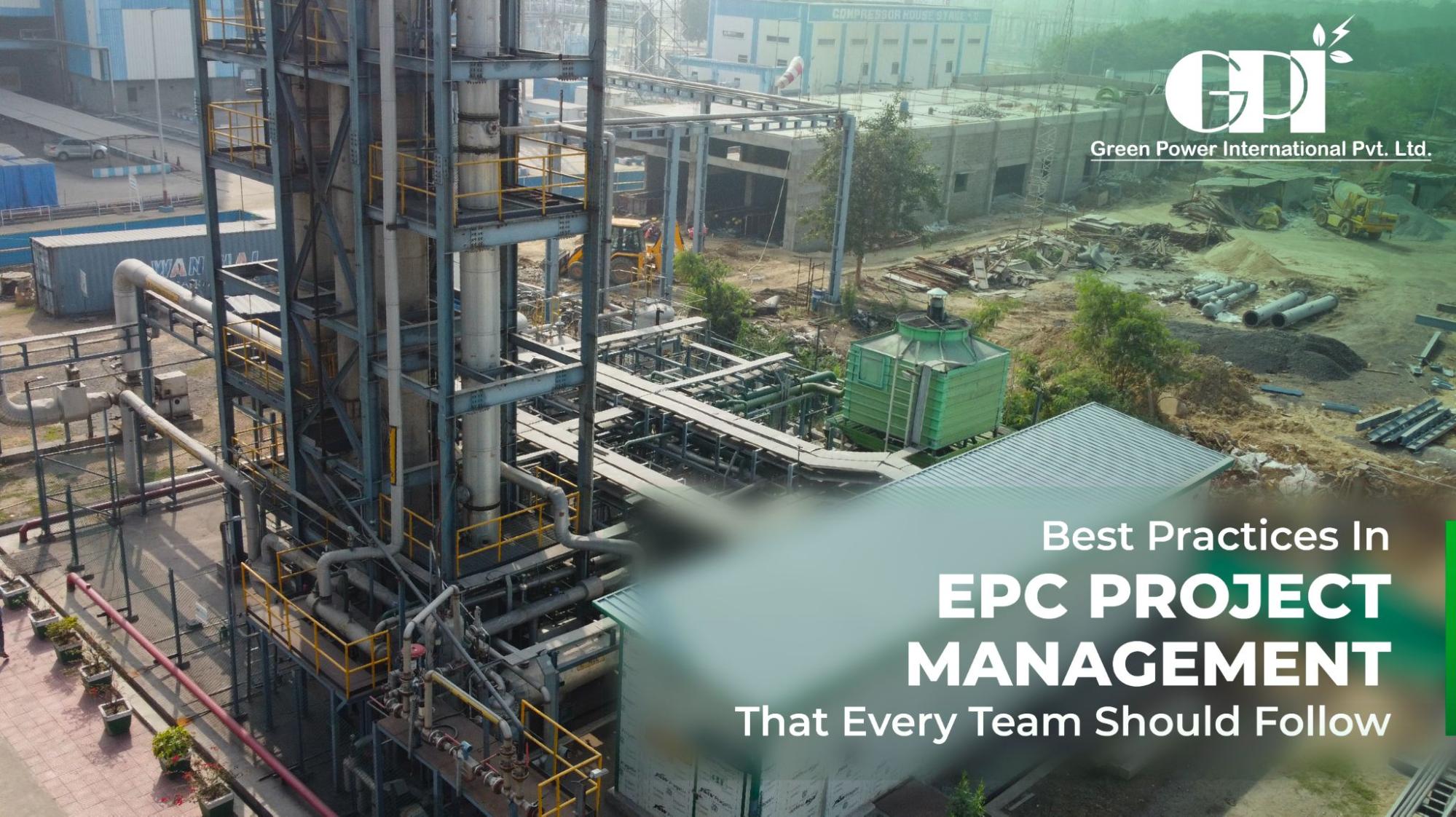
Best Practices In EPC Project Management That Every Team Should Follow
Every successful engineering or infrastructure project depends on how well planning, procurement, and execution come together. Across the energy and industrial sectors, the EPC model—Engineering, Procurement, and Construction has become the preferred approach for delivering end-to-end solutions with accountability, precision, and efficiency.
Through our experience at Green Power International, we’ve seen that the quality of EPC project management defines not just a project’s success but also its long-term reliability and performance. Drawing from years of working on gas gensets and turnkey EPC solutions, we’ve identified 10 best practices that every EPC team should follow to ensure timely, cost-effective, and high-quality project delivery.
Understanding EPC Project Management
It’s important to break it down into its three core components to comprehend what EPC project management is:
- Engineering: The design stage that defines project specifications, layouts, and technical direction.
- Procurement: The process of sourcing equipment and materials that meet required quality and delivery standards.
- Construction: The stage where plans are turned into reality through site work, installation, and commissioning.
This integrated structure ensures end-to-end responsibility, reducing communication gaps and improving coordination across all stages, an essential factor for large-scale EPC projects in India, where strict deadlines and complex logistics are common.
Top 10 Best Practices In EPC Project Management
1. Define A Clear Scope and Objectives
A successful project begins with a well-defined scope. Establishing measurable goals, deliverables, and technical parameters minimizes ambiguity. Early alignment supports accurate budgeting, efficient resource planning, and transparent communication with all stakeholders.
2. Foster Collaborative Design Integration
Cross-disciplinary coordination between mechanical, electrical, and civil teams prevents design conflicts and rework. Using tools like 3D modeling and BIM (Building Information Modeling) ensures design consistency and visualizes interdependencies before construction begins.
3. Build A Strategic Procurement Plan
Procurement directly affects cost and schedule performance. A structured plan that includes supplier prequalification, transparent bidding, and quality audits ensures reliability. Digital procurement tracking and supplier performance dashboards offer real-time visibility, vital for managing India’s dynamic supply conditions.
4. Implement Proactive Risk Management
The best EPC teams anticipate risks, not just respond to them. Identifying potential technical, commercial, and operational risks early allows teams to prepare mitigation strategies. Regular reviews help maintain project stability and profitability even in changing conditions.
5. Maintain Continuous Quality Oversight
Quality isn’t a one-time check; it’s a process. From design validation to material testing and documentation, maintaining strict quality standards across all phases ensures compliance and customer satisfaction. Insights from completed projects are integrated into future executions for ongoing improvement.
6. Prioritize Safety And Compliance
Safety underpins every successful EPC project. Regular training, on-site supervision, and independent audits create a strong safety culture. Adhering to environmental and statutory norms also reinforces operational reliability and responsible execution.
7. Strengthen Communication Channels
Transparent communication keeps all functions, like engineering, procurement, and construction, aligned. Centralized reporting tools, digital dashboards, and regular coordination meetings promote visibility, accountability, and swift problem-solving throughout the project lifecycle.
8. Leverage Technology for Efficiency
Digital transformation is redefining EPC project execution. At Green Power International, we use advanced project management software to complete projects on schedule and within budget.
Our technology-driven approach has helped us achieve 390 installations, serve over 300 customers, and complete 257 projects successfully across India. Our diverse portfolio spans the power generation, oil and gas, data centers, food processing, and manufacturing industries, which benefit from efficient, reliable, and scalable EPC solutions.
Through continuous innovation and smarter systems, we ensure every project delivers measurable value, operational precision, and sustainable performance.
9. Track Performance And Encourage Feedback
Monitoring key performance indicators (KPIs) such as schedule adherence, cost variance, and productivity helps teams measure results objectively. Post-project evaluations support knowledge sharing and refine execution strategies for continuous improvement.
10. Build a Culture of Ownership And Accountability
People make the difference in EPC success. Encouraging individuals to take ownership of their roles fosters collaboration, precision, and pride in execution. Recognizing contributions and ensuring clear leadership builds a culture where accountability drives performance.
Mastering EPC project management demands foresight, discipline, and adaptability. Applying these ten best practices strengthens every stage of an EPC project, from engineering to construction, resulting in safer, more efficient, and more sustainable outcomes.
We continuously refine our methodologies and embrace emerging technologies that enhance performance and reliability. As an experienced EPC solution provider, our mission remains constant: to deliver projects that empower industrial growth and set new benchmarks for quality and excellence across India.